From Boundary To Benefit: Mapping The Sterile Barrier That Protects Quality
In regulated manufacturing and healthcare-adjacent environments, quality protection begins long before a product reaches its end user. The sterile barrier is a defined system of materials, processes, and controls that prevents contamination from the moment a product is sealed through storage, transport, and use. Mapping this barrier helps organizations identify risk points, maintain consistency, and protect product integrity at every stage.
What the Sterile Barrier Includes
A sterile barrier is not a single layer or package. It is a coordinated set of components that work together to block microorganisms, particulates, and environmental exposure. Packaging materials, seals, closures, and handling procedures all contribute to the barrier’s effectiveness.
Each component must perform reliably on its own while also supporting the system as a whole. Weakness in one area can compromise everything downstream, even if other elements perform as expected.
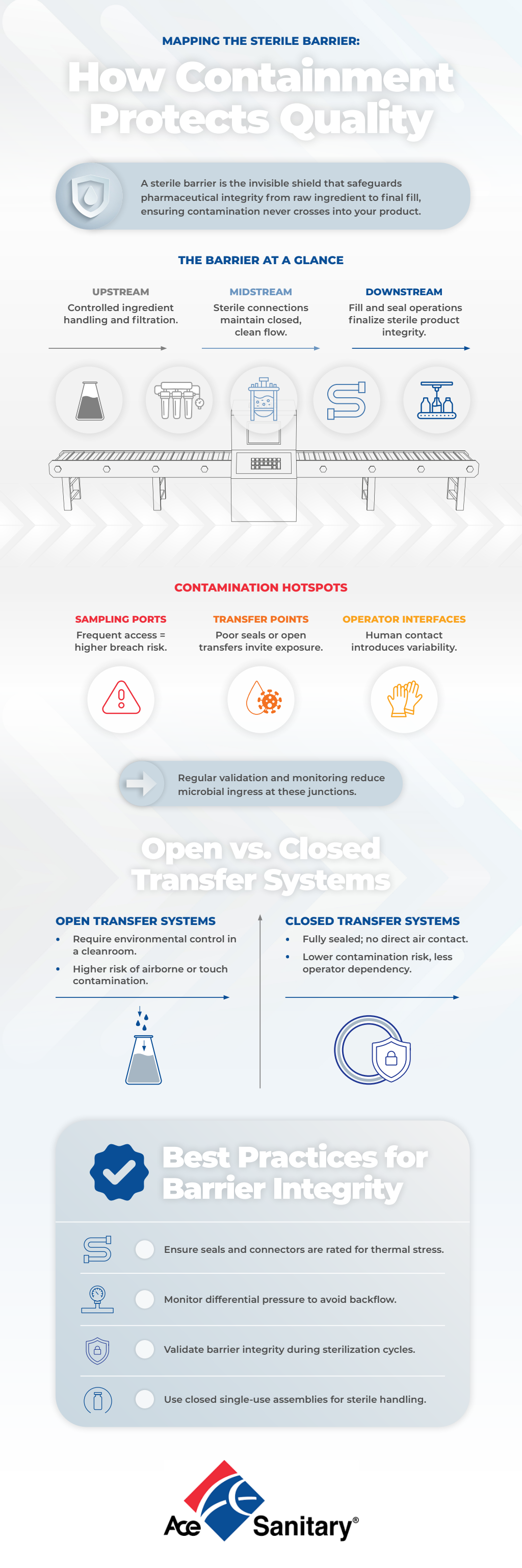
Mapping Containment From Start to Finish
Mapping the sterile barrier means documenting how containment is maintained across the full lifecycle of a product. This starts with material selection and continues through assembly, sealing, inspection, storage, and transport.
Process mapping helps teams visualize where exposure risks may occur. Transitions such as equipment handoffs, manual handling, or storage changes are common pressure points. Clear documentation supports consistency and reduces variation that can lead to quality failures.
Materials and Interfaces Matter
The points where materials meet are often the most vulnerable. Seals, gaskets, and fasteners must maintain integrity under real operating conditions such as pressure changes, vibration, or repeated use.
Components such as sanitary hardware support these interfaces by providing cleanable, secure connections that reduce contamination risk. Their role is often overlooked, yet they directly affect how well containment holds over time.
Environmental Controls and Human Factors
A sterile barrier extends beyond physical materials. Environmental conditions such as airflow, humidity, and temperature influence contamination risk. Cleanroom protocols, gowning procedures, and training also shape barrier performance.
Mapping should include human interaction with the system. How products are handled, inspected, and moved can either support or undermine containment goals.
Containment protects quality by creating predictable, controlled boundaries between products and their environment. Mapping the sterile barrier turns that protection into a visible, manageable system. When organizations understand where and how containment works, they gain stronger control over quality outcomes and reduce risk across operations. Check out the infographic below to learn more.