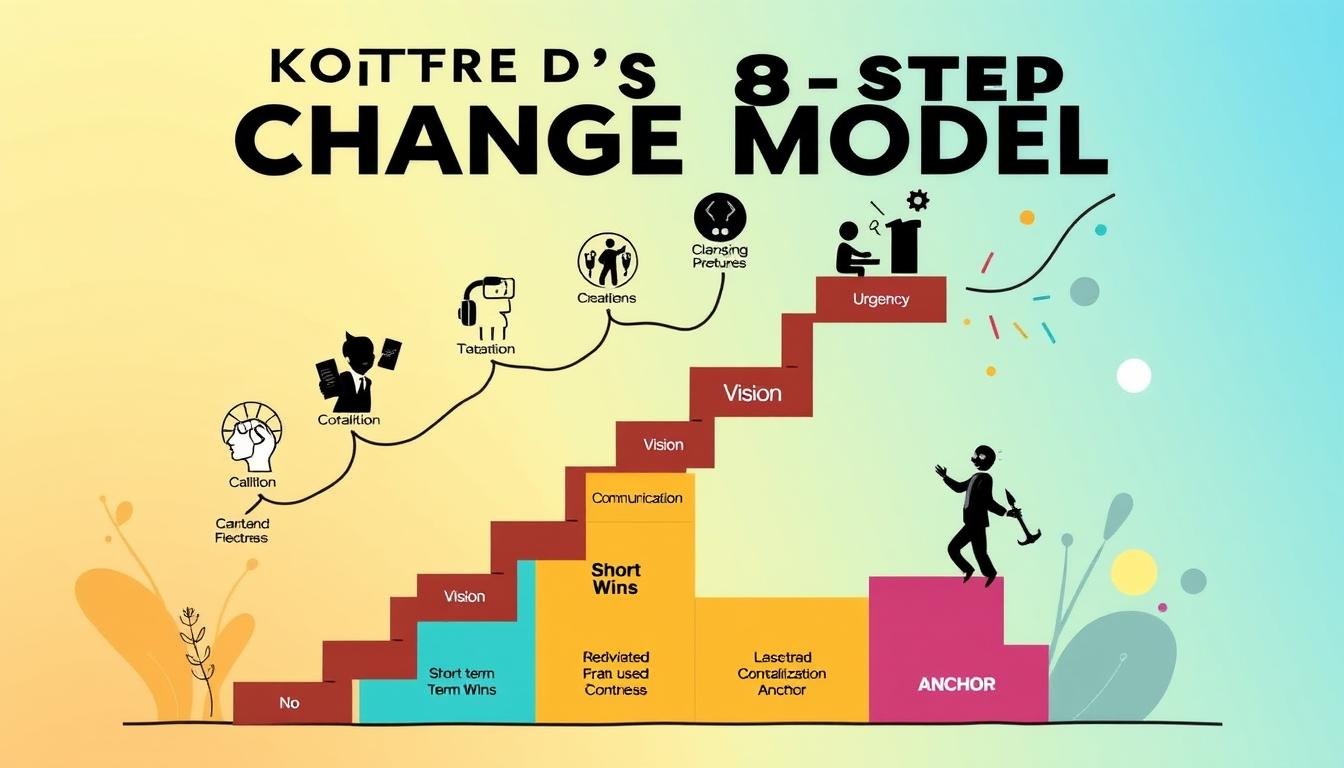
Mastering Kotter’s 8-Step Change Model for Success
What if the key to your organization’s future success lies in understanding a change strategy from nearly three decades ago? Dr. John Kotter’s 8-Step Change Model is still a powerful tool for today’s changing business world. With 3,200 private companies failing in 2023 despite getting a lot of funding, leading through change is more important than ever.
This article explores the Kotter change model, a detailed system for handling change. It focuses on leadership in change management. We’ll share strategies that leaders and managers need to start and keep change going. Let’s dive into this model that’s still key today.
Key Takeaways
- Kotter’s 8-Step Change Model offers a systematic approach for guiding organizations through change.
- The model highlights the significance of leadership in ensuring a successful transformation.
- Effective communication is crucial for cultivating a shared vision among employees.
- Identifying and removing obstacles to change enhances the likelihood of success.
- Engaging a dedicated group of change agents increases momentum and commitment to the change vision.
Understanding the Need for Change in Organizations
Today, organizations face big challenges that make change a must. They need to be adaptable to stay ahead. The idea of changing how organizations work is big, thanks to new tech and fast-changing markets.
The Importance of Adaptability
Being adaptable is key, not just nice to have. If not, companies might not grow. John P. Kotter’s research shows only 30% of changes work out. But, those that do often have strong support from management, around 75%.
This support helps make change urgent. It pushes teams to try new things and work differently.
Consequences of Stagnation
Not changing can hurt a lot. Stuck companies get less efficient and their workers get less engaged. Not being adaptable can hurt a company’s future success a lot.
Changing is not just for survival. It’s about building a culture that always gets better. This culture leads to new ideas and bouncing back, key for success in today’s fast world.
Overview of Kotter’s 8-Step Change Model
Change management is tough for many organizations, with over 70% of changes failing. Dr. John Kotter introduced the John Kotter change model in 1996. This model offers a strong plan for transforming organizations. It highlights the need for effective leadership in change for success.
Background on John Kotter’s Methodology
Dr. Kotter’s 8-Step Change Model came from his deep research. He found that only 30% of changes succeed. He studied over 100 organizations to develop a structured approach. This approach includes eight key steps.
For change to work, at least 75% of management must support it. This support helps raise awareness about the need for change.
Core Principles of the Model
The John Kotter change model has several key principles:
- Creating a sense of urgency is key to starting change. It motivates employees to find solutions.
- Forming a guiding coalition helps with leadership and keeps the change moving forward.
- Building a strategic vision helps guide the implementation, ensuring everyone knows what to do.
- Communicating the change vision to all employees is important. It helps get support and understanding.
- Removing barriers to change increases the chances of success.
- Recognizing and celebrating short-term wins keeps employees motivated and prevents them from getting discouraged.
- Changing as a continuous process makes sure new practices stick around.
- Integrating changes into the culture is key for lasting success. It makes new behaviors a part of daily work.
Create Urgency for Change
Creating urgency is key in Kotter’s change model. It highlights the need for a strong reason to change, supported by facts and trends. Companies must show why change is needed, linking it to their world and people.
Identifying the Need for Change
Spotting the need for change means looking closely at data and trends. When 75% of managers see no point in sticking with the old ways, change is more likely to happen. Leaders must show how staying still can hold back progress.
Looking at what happened to brands like Blockbuster and Sears drives home the point. These stories warn us of the dangers of not changing. They show why we must act quickly to avoid big problems.
Engaging Stakeholders
Getting stakeholders on board early makes them care more about new plans. Talking openly can ease worries about the unknown. Dr. John Kotter says good communication is key to building trust.
Leaders should be open, sharing both good and bad news. They should work with stakeholders to understand and support the change vision. This teamwork helps build a sense of urgency and deals with any resistance to change.
Forming a Powerful Coalition
In John Kotter’s Eight Step Leading Change Model, building a strong coalition is key. This group includes leaders from different backgrounds who help push the change forward. It’s important to know how leadership in change management works to make sure the coalition is strong and respected.
The Role of Leadership in Change
Good change efforts need leadership in change management that brings people together. Leaders must use their power wisely to avoid slowing down the change. By working closely with key people and keeping the coalition engaged, leaders build trust and excitement among workers. This keeps the change moving forward.
Selecting the Right Change Agents
Choosing the right change agents is crucial for a successful coalition. These should be respected colleagues who truly believe in the vision. Their dedication makes the coalition stronger. It’s important to avoid mistakes like picking people who don’t have the right influence or commitment. Leaders should make sure the coalition includes people from all levels of the organization. This creates a shared goal and vision, making the change better.
| Key Elements of a Guiding Coalition | Description |
|---|---|
| Quality of Members | Influential and credible individuals who can champion the change. |
| Diverse Representation | Members from various organizational levels ensure varied perspectives. |
| Ongoing Support | Continued engagement from leaders helps sustain momentum. |
| Clear Structures | Defined roles and responsibilities allow for efficient collaboration. |
| Empowerment | The coalition should work outside typical hierarchies to maximize impact. |
Create a Vision for Change
Creating a vision for change is key in Kotter’s eight-step change model. It starts with making a compelling vision statement. This statement should show what the organization wants for the future.
A good vision statement helps reduce disagreements and makes the change clear. It shows the way forward.
Crafting a Compelling Vision Statement
A strong vision statement should touch on both the logical and emotional sides of change. Getting different stakeholders involved helps build ownership and alignment. The vision must be realistic, wanted, clear, flexible, and agreed by all.
If this step is rushed, it can lead to more time, effort, and money spent on the change.
Sharing the Vision Across the Organization
Sharing the vision well is key to getting people on board and active. Leaders should lead by example and use stories and symbols that connect with employees. Letting others share the vision makes it more personal and builds responsibility.
Keeping up communication during the change keeps everyone committed and motivated.
| Key Elements of a Vision Statement | Importance |
|---|---|
| Feasibility | Ensures that goals are attainable based on current resources |
| Desirability | Inspires motivation among stakeholders to strive towards the vision |
| Clarity | Reduces confusion and aligns efforts toward common goals |
| Flexibility | Allows for adjustments as circumstances change |
| Communicability | Facilitates widespread understanding across all levels of the organization |
Creating and sharing the vision helps teams navigate through change. It empowers people, leading to actions that reduce costs and increase success.
Implementing Change Communication Plans
Successful change efforts need a strong communication strategy. A well-planned change communication plan helps everyone understand and get involved. It’s key to keep the team updated and engaged at every step.
Consistent Messaging
It’s vital to have consistent messages in a change communication plan. Regular updates stop rumors and make things clear. Messages should be clear, short, and fit the audience’s needs.
Addressing Employee Concerns
Listening to employee concerns is a key part of the plan. When workers feel heard, they trust the change more. Using town hall meetings or Q&A sessions shows you value open talk. This helps reduce resistance and makes the change smoother.
| Communication Strategy | Benefits | Challenges |
|---|---|---|
| Regular Updates | Keeps employees informed | Requires ongoing effort |
| Feedback Mechanisms | Addresses employee concerns | Potential negative feedback |
| Clear Messaging | Reduces misunderstandings | Complex information can confuse |
| Engagement Events | Builds a culture of involvement | May not reach all employees |
In summary, a good change communication plan needs constant updates and listening to all staff. This approach helps organizations change smoothly and with everyone on board.
Removing Obstacles to Change
Organizations face many challenges when they try to change. It’s key to remove obstacles like old systems and resistance to new ideas. Leaders at all levels must work together to create a culture that values openness and new ideas.
Identifying Barriers
It’s important to know what’s stopping change. Here are some ways to find out:
- Conducting surveys and interviews to gather employee feedback
- Analyzing workflow processes to pinpoint problems
- Reviewing organizational structures to find hierarchical issues
These steps help uncover the challenges an organization faces. This makes it easier to remove obstacles.
Empowering Change Leaders
After finding out what’s holding us back, it’s time to empower leaders. They need the tools and freedom to tackle challenges. This includes:
- Providing training and development chances to improve skills
- Encouraging autonomy in making decisions to spark innovation
- Building a support network to share best practices and solutions
By doing these things, leaders can turn obstacles into chances for growth. This helps the organization move towards its goals smoothly.
| Barrier Type | Example | Solution |
|---|---|---|
| Hierarchical Resistance | Managers unwilling to share power | Encourage collaborative decision-making |
| Outdated Systems | Legacy technology hindering productivity | Upgrade to modern, flexible solutions |
| Employee Reluctance | Fear of change among staff | Implement open communication and training |
Conclusion
Kotter’s 8-Step Change Model can greatly improve an organization’s ability to adapt in today’s complex business world. It focuses on strong leadership, a clear vision, and open communication. This approach helps organizations smoothly manage change, leading to lasting success and a culture that welcomes ongoing improvement.
Studies show that the success of Kotter’s model depends on key steps. These include creating a sense of urgency and building a strong team. These actions help present strong reasons for change and bring employees together. This shared commitment helps drive the change process forward.
Learning Kotter’s 8-Step Change Model helps leaders start positive changes in their organizations. It also motivates the workforce to be resilient and agile. By using this model, companies can make successful changes that help them stay competitive in a changing world.
Source Links
- Master Kotter’s 8-Step Change Model for Effective Implementation
- 8-Step Kotter Change Management Model
- Mastering Organizational Change: A Guide to Kotter’s 8-Step Change Model – Humans of Globe
- What is Kotter’s 8 Step Change Management Model (All you need to know)
- How to Implement Change with Kotter’s 8-Step Change Model
- Kotter’s 8-Step Change Model (+Advantages & Disadvantages)
- Kotter’s 8 Step Change Model | A Comprehensive Step-by-Step Guide
- Kotter’s Leading Change Step 1: Establishing a Sense of Urgency
- Change Management – Step 1: Creating a Sense of Urgency
- Creating a Sense of Urgency – Management is a Journey®
- Leading Change (Step 2) – Create the Guiding Coalition – Management is a Journey®
- Your Guiding Coalition will Make or Break your Business Change.
- Kotter’s 8 Steps for Leading Change in Organizations | Splunk
- Kotter’s Leading Change Step 3: Creating a Vision
- How can you create a compelling vision for change using Kotter’s 8-step framework?
- How to Successfully Implement Kotter’s 8 Step Change Model | Lucidity
- Kotter’s 8 step Model of Change
- Successful Change Management—Kotter’s 8-Step Change Model – LeadershipThoughts
- How to lead Organizational Change: John Kotter’s 8-step change model – The World of Work Project
- Putting Kotter’s 8-Step Change Model Into Action | MTD Training
- Peer Reviewed: A Change-Management Approach to Closing Care Gaps in a Federally Qualified Health Center: A Rural Kentucky Case Study
- In a nutshell: Change management model according to Kotter
- Kotter’s 8 Step Model for Leading Change: A Big Opportunity or yet another model?