Intellectual Property for Nonprofit Content.
Have you ever thought about how intellectual property rights apply to nonprofits? In today’s world, where making and sharing content is common, it’s key to know about copyright and trademark protection. Understanding these is vital for nonprofits to manage their intellectual assets well.
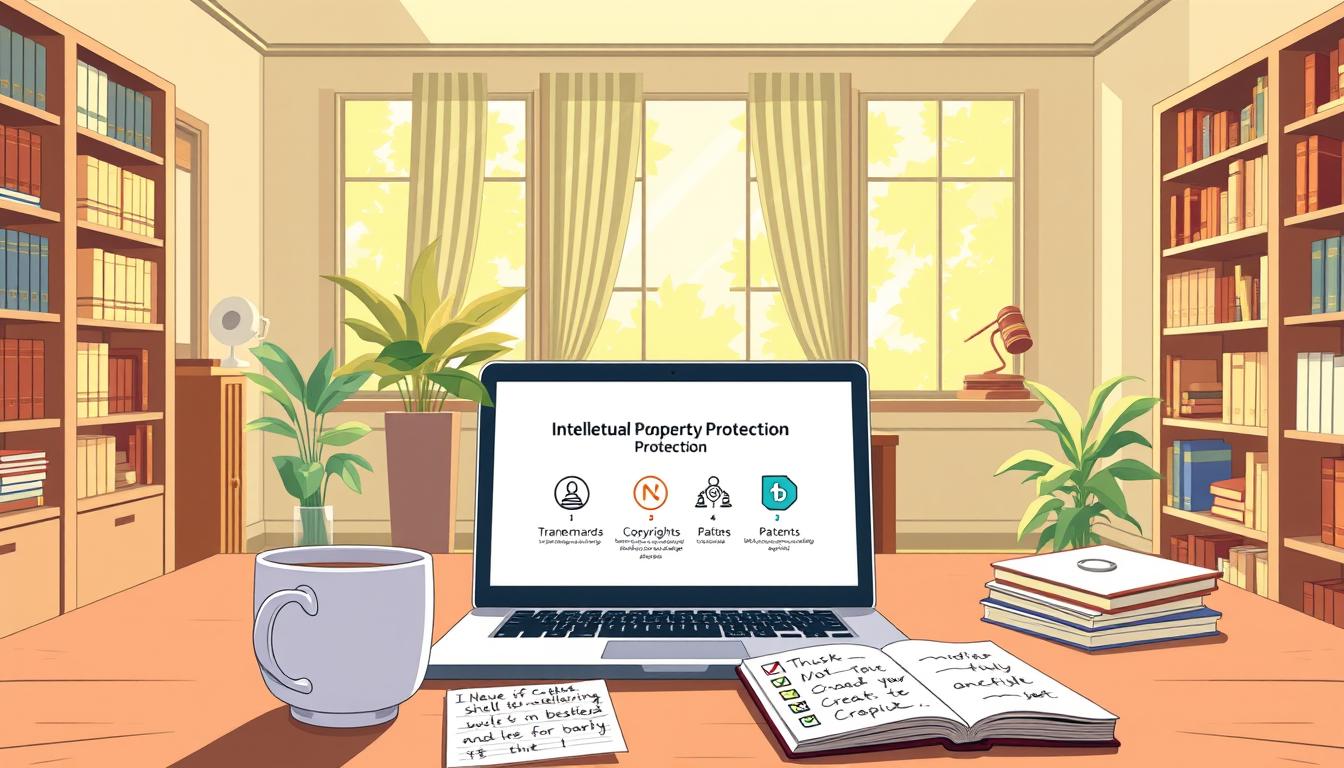
Intellectual property protection is vital for all businesses, including nonprofits. Copyrights and trademarks are crucial for NPOs. Copyrights cover original works, while trademarks protect sources of goods or services. The rise of technology and the internet has made intellectual property rights more valuable but also easier to infringe upon.
For nonprofits, intellectual property helps achieve their goals and expand their programs. But, it must be used for non-commercial purposes and not mainly for making money. Agreements about intellectual property must not benefit individuals in the organization. Any money made from IP sales must be shared in a way that supports the nonprofit’s main goal.
While nonprofits might not focus as much on intellectual property as businesses do, many are in the information business. This includes universities, museums, libraries, and public media. Libraries, for example, have valuable materials, and universities can make a lot of money from licensing agreements, like the $525 million deal between Gilead Sciences and Royalty Pharma.
Nonprofits must find a balance between making content available and making money from licensing. This requires smart decisions, like for-profit companies make. They also face big risks from intellectual property violations. This makes it crucial to do thorough searches, have good licensing agreements, and know who owns the content created by volunteers, employees, or contractors.
Key Takeaways
- Intellectual property protection is increasingly important for nonprofits in the digital age.
- Copyrights and trademarks are critical types of intellectual property for NPOs.
- Intellectual property must serve the nonprofit’s organizational purpose and not primarily generate revenue.
- Nonprofits must balance open access and potential revenue generation through licensing arrangements.
- Proper licensing agreements and clear ownership rights are essential to mitigate legal risks.
Understanding Intellectual Property Rights for Nonprofits
Intellectual property (IP) rights are key for nonprofits to guard their unique content and innovations. In today’s world, it’s vital for NPOs to grasp copyrights and trademarks. This helps protect their intellectual assets. A solid intellectual property policy ensures NPOs follow fair use guidelines and support noncommercial use of materials.
Copyrights and Trademarks for NPOs
Copyrights automatically protect original works from the moment they’re created. This gives the creator special rights to their work. But, registering copyrights offers more benefits, like the chance to sue for infringement and seek damages.
Trademarks, on the other hand, safeguard brands, logos, and slogans. They help an organization stand out. While trademark rights start with use, registering gives exclusive rights nationwide and lets you use the ® symbol.
Last year, Americans gave a record $471 billion to charities and nonprofits. This money supported causes like social justice and Covid-19 relief. For many NPOs, protecting their intellectual property is crucial. It helps them stay competitive and attract donations.
The Growing Importance of IP in the Modern World
In today’s digital world, IP matters to all organizations, not just tech companies. The internet makes sharing and accessing content easy. So, it’s important for nonprofits to know their IP rights and how to protect them.
By following best practices for IP management, NPOs can avoid legal issues. This lets them focus on their mission. For example, getting the right licenses for music and understanding work-for-hire can help.
| IP Approach | Description |
|---|---|
| Cost-based | Estimates the cost to develop similar intellectual property |
| Income-based | Considers licensing costs and potential revenue streams |
| Market-based | Uses comparative transactions for valuation |
As nonprofits deal with intellectual property, getting legal advice is crucial. Keeping up with copyright and trademark law is also important. By managing their IP well, NPOs can protect their brand and innovations. This ensures they can keep working towards their goals.
Common Myths About Intellectual Property and Nonprofits
For nonprofit groups, understanding intellectual property can be tough. Many myths and misconceptions exist. One big myth is that nonprofits don’t own any intellectual property. But, they actually have valuable trademarks, copyrights, and trade secrets that need protection.
Another common mistake is thinking that work by volunteers belongs to the organization. But, unless there’s a written agreement, the creator usually owns the copyright. This can cause problems if the organization wants to use or change the work later.
Many believe that anything on the internet is free to use. But, most online content is copyrighted, and you need permission to use it. Not getting the right licenses can lead to expensive legal fights. For example, the Wounded Warrior Project won a $1.7 million case in 2009 over trademark infringement.
Some nonprofits think fair use covers all uses of others’ work. But, fair use isn’t a free pass. You must consider the nature of the use, how much is used, and its impact on the original work’s market.
Knowing these myths and misconceptions helps nonprofits protect their assets and avoid legal trouble. Getting professional advice and setting clear policies on intellectual property is key. This way, NPOs can confidently handle the complex world of intellectual property.
Conducting an Internal Audit of Intellectual Property Assets
Nonprofit organizations (NPOs) must protect their intellectual property to keep their brand and mission safe. A key step is to do a detailed intellectual property audit. This audit finds, documents, and checks all intellectual property, like trademarks, copyrights, and patents.
During the audit, nonprofits look at their intellectual property’s strengths and weaknesses. This helps figure out which assets need quick action and which might need more protection. For example, 80% of the top brand names are very distinctive, showing how important strong trademarks are.
Nonprofits should also plan a budget for trademark and brand protection. The cost of trademark lawsuits can be very high, around $775,000. By managing their IP well, nonprofits can avoid expensive legal fights and keep their reputation safe.
Registering for Copyright and Trademark Protection
After the audit, nonprofits should register their copyrights and trademarks. Copyright registration protects original works like written content, artwork, and software. It lets nonprofits sue for infringement and get statutory damages.
Trademark filing is also key for protecting a nonprofit’s brand. Trademarks guard words, phrases, symbols, or designs that make a nonprofit’s goods or services unique. Registering trademarks gives nonprofits the right to sue for infringement.
| Jurisdiction | Trademark Protection |
|---|---|
| United States | TM (trademark), SM (service mark), ® (registered trademark) |
| European Community (27 countries) | Single filing for trademark protection |
| International (Madrid Protocol) | Facilitates international trademark registration |
The time it takes for trademark applications can vary a lot, especially in countries that follow the first-to-file rule. Nonprofits should also watch out for “trademark troll” scams. This shows why it’s so important to register trademarks quickly.
Navigating the Work-for-Hire Doctrine in Copyright Law
The work-for-hire doctrine is key in copyright law for nonprofits. It says that works by employees are usually owned by the organization. But, for independent contractors, a written agreement is needed to own the copyright.
To make a work-for-hire, both sides must agree in writing. It’s best to use the phrase “work-for-hire” in contracts. But, if the agreement clearly shows who owns the work, it’s okay without it.
The Employment Test vs. Specially Commissioned Test
For employees, the work-for-hire rule applies automatically. But, for independent contractors, there are three rules:
- Deliverables must be specially ordered or commissioned.
- A written contract must explicitly state that the deliverables are work-for-hire.
- Deliverables must fall within one of nine limited categories of works, which typically do not include business software or technical documentation.
Being called work-for-hire can hurt the creator’s rights. They might lose the right to reproduce or distribute their work. But, for the hiring party, it’s good. It means they own the work and all its rights.
Best Practices for Written Agreements with Employees and Contractors
It’s wise to have written agreements for all works. Studies show that companies with these agreements face fewer legal issues. Including an IP assignment in the contract helps transfer ownership to the company.
Nonprofits should be careful with work-for-hire language. It might make contractors think they’re employees. Good contract writing is key to protect rights and avoid disputes.
Fair Use and Public Domain: What Nonprofits Need to Know
Nonprofits use brochures and newsletters to spread the word about their goals. They often include photos and graphics from other sources. But, this can lead to copyright issues and questions about fair use.
The fair use doctrine is a special rule that lets nonprofits use copyrighted material in some cases. It looks at four things: the use’s purpose, the type of work, how much is used, and its impact on the market. Uses that add something new or are for commentary or criticism are more likely to be fair use.
Public domain works, however, can be used by anyone without worrying about copyright. Works published in the U.S. before 1923 are public domain. Works published before 1964 might enter the public domain if the copyright wasn’t renewed. And, works from before 1989 without a copyright notice might also be public domain.
Nonprofits publish many things, like newsletters and conference materials. The fair use doctrine allows for some uses, but courts decide each case. Unpublished and creative works get more protection than published ones.
To avoid copyright problems, nonprofits can use public domain resources. The Smithsonian and British Library offer free images. Sites like Unsplash and Wikimedia Commons also have free media for nonprofits to use.
Licensing Music for Nonprofit Events
Nonprofits often use popular music to promote their events and engage audiences. But, they must understand the legal side of music licensing. Sound recordings of music are protected by copyright, and a license is needed for public performances. Without the right licenses, nonprofits could face costly legal issues, no matter their size or purpose.
Nonprofits use music in many ways, like at fundraising events, on social media, or in educational materials. They need to know about two types of music copyright: composition (lyrics and sheet music) and sound recording. Each type needs its own license, which can be gotten through Performing Rights Organizations (PROs) like ASCAP, BMI, and SESAC. These groups manage music composition licenses and offer different agreements based on the venue and event frequency.
Performing Rights Organizations: ASCAP, BMI, and SESAC
Performing Rights Organizations (PROs) own the US performing rights for most songs. They offer licensing structures for venues. Nonprofits might have to pay a flat fee to PROs, which covers many song licenses. But, some nonprofits might have to pay a minimum annual fee, even if they don’t make much money from events.
Here’s a table comparing the three main PROs in the United States:
| PRO | Founded | Represented Artists |
|---|---|---|
| ASCAP | 1914 | Over 800,000 |
| BMI | 1939 | Over 1 million |
| SESAC | 1930 | Over 30,000 |
PROs watch music usage at venues like bars and restaurants to make sure there’s compliance. Nonprofits hiring DJs or bands still need to get the right licenses from PROs. It’s wise for nonprofits to check licensing rights in contracts with artists and venues to avoid legal trouble.
Fair use is a common mistake; nonprofits are not exempt from licensing rules, even for educational use. Fair use has four factors, and each case is looked at closely. Even small nonprofits can face legal action for copyright infringement, as it’s a serious legal issue.
Using Attendee Photographs: Copyright and Right of Publicity Considerations
Nonprofit groups using event photography for ads must think about copyright and publicity rights. The photographer usually owns the photos’ copyright. But, people in the photos might have rights to control how their image is used.
To avoid legal trouble, nonprofits should get written agreements from photographers. These should cover image usage permissions and copyright transfers. It’s also key to get consent from people in photos for commercial use to avoid right of publicity claims.
Instead of direct consent, nonprofits can tell attendees about photo use through tickets or signs. But, how well these methods work can depend on where you are. Also, if someone has a secret relationship with the group, you should check photos carefully before using them in ads.
| Stakeholder | Copyright Considerations | Publicity Rights Considerations |
|---|---|---|
| Photographer | Default copyright owner, unless work-for-hire applies | N/A |
| Attendees | N/A | May have the right to control commercial use of likeness |
| Employees | Work-for-hire doctrine may apply | Employment agreements should address publicity rights |
| Government Officials | N/A | Use of likeness may be subject to governmental ethics rules |
| Famous Persons | N/A | Use of likeness for promotion may require consent or compensation |
By tackling copyright and publicity rights early, nonprofits can use event photography well. They can promote their mission without legal risks. Clear image usage permissions and getting the right consents help follow the law and keep good relations with attendees.
Intellectual Property for Nonprofit Content: Pre-Existing IP
Nonprofits with pre-existing intellectual property face challenges in managing copyrights and avoiding conflicts of interest. They must follow copyright laws to use these assets effectively. This ensures the nonprofit’s value is maximized.
There are several ways nonprofits can handle pre-existing intellectual property. These include:
- Gifting or selling the copyrights to the nonprofit organization
- Donating or selling wholesale copies of the copyrighted material
- Allowing the nonprofit to purchase directly from the publisher
When setting up royalty deals, nonprofits must avoid conflicts of interest. They can donate royalties back to the nonprofit or have the publisher send royalties directly. This helps manage potential issues.
Copyright registration costs between $35 to $55. Statutory damages for infringement can be high:
| Infringement Type | Minimum Damages | Maximum Damages |
|---|---|---|
| Non-willful | $750 per work | $30,000 per work |
| Willful | $750 per work | $150,000 per work |
To protect themselves, nonprofits should quickly remove content if a copyright claim is made. Keeping records of copyright registrations and publication dates is also wise for future disputes.
Navigating Derivative Works and Ownership
Nonprofits often think they own copyrights in new versions of original works. But, legal ownership actually goes to the creator of the new work if they have permission. The new work must show some creativity to be considered copyrightable.
Once a copyright owner gives permission for a derivative work, they can’t take it back. The person who made the derivative work has all the rights to it. They can license or transfer the work without needing permission from the original owner.
To protect their interests, nonprofits should clearly define who owns what in agreements. By addressing pre-existing intellectual property and potential conflicts, nonprofits can use these assets safely and effectively.
Commissioned Curriculum and Content Creation for Nonprofits
Nonprofits often create curriculum development and commissioned content to help their mission. But, understanding intellectual property rights can be tricky. When a nonprofit pays for content, they usually own it unless an agreement says otherwise.
Foundation Group helps thousands of nonprofits each year. They worked with Jane Doe, an Executive Director, who also founded and taught her organization. Jane wanted to know about copyright for a curriculum she made under a licensing agreement with her nonprofit.
Determining Copyright Ownership and Licensing Agreements
If a creator wants to keep their rights, they can make a licensing agreement with the nonprofit. This lets the nonprofit use the content. But, the creator should not get paid or royalties for the nonprofit’s use.
Issues of intellectual property and conflict of interest are encountered almost weekly in the nonprofit sector.
When making a licensing agreement for commissioned content and curriculum development, nonprofits have options. They can choose:
- Time-limited licenses with a specific end date
- Automatically revocable licenses under certain conditions
- Non-exclusive licenses allowing the creator to use the content elsewhere
- Exclusive licenses giving the nonprofit sole rights
- Royalty-free licenses to avoid conflicts of interest
By thinking about copyright and making good licensing agreements, nonprofits can handle intellectual property well. This helps them keep their mission and governance strong.
Partnering with For-Profit Entities: Commercial Co-Ventures
Nonprofits often team up with for-profit companies through commercial co-ventures, or cause marketing. They do this by letting the for-profit use their name or logo for a share of profits. This can be a great way to raise money and awareness, but it needs to be done carefully to follow regulatory compliance and keep the public’s trust.
Regulatory Requirements and Best Practices
Right now, 24 states have laws about commercial co-ventures. Many of these states need a written contract from both sides before starting any sales or charity work. Federal and state laws also apply to these deals to stop unfair practices. Nonprofits should follow guidelines from groups like the Better Business Bureau’s Wise Giving Alliance and the Independent Sector.
Tax rules are also important. Money made from these deals might be taxed if they’re not closely related to the nonprofit’s main work. The IRS looks at how often and for how long these activities happen to decide if they’re taxed.
Practical Considerations and Public Perception
Nonprofits need to think about the practical side and how people might see them when they join commercial co-ventures. Doing too much unrelated work can risk losing tax-exempt status. To avoid this, some nonprofits use separate companies for these activities.
How the public sees these partnerships is also key. Cause marketing can help raise money and awareness, but it can backfire if it seems wrong or doesn’t match the nonprofit’s goals. Being open, honest, and clear about the connection between the nonprofit and the commercial deal is crucial for keeping trust and support.
Legal Considerations for Nonprofits Using Founder-Created IP
Nonprofits using founder-created content face important legal issues. They must deal with intellectual property licenses and tax-exempt status. It’s vital to know the rules for paid employees and volunteers, and the rights of written and implied licenses.
One big thing to think about is who owns copyrights for work done by non-employees. Nonprofits need a clear agreement to own these copyrights. Sadly, 50% of them might think they own it without the right papers. Also, 1 in 3 nonprofits might face copyright problems if they let volunteers or affiliates make changes without permission.
To keep safe, 100% of nonprofits must make sure they own and can use original copyrighted stuff. They need to make agreements that cover who owns and can use changes to the work. Without these agreements, 80% of the time, there can be fights over who owns and can use the work.
When a nonprofit pays its founder for using their intellectual property, they must follow IRS rules. They also need to watch out for special rules for internet content. They can be held responsible for copyright problems with content from users on their sites.
By knowing the law about founder-created content and intellectual property licenses, nonprofits can keep their tax-exempt status. They can also avoid expensive legal fights. Getting legal advice and making clear agreements about who owns and can use the work are key steps.
Conclusion
The nonprofit world is changing fast, and intellectual property (IP) is key for protecting what’s unique. Nonprofits can keep their innovations safe, attract more money, and stand out by having a strong IP strategy. This plan should cover copyright for original content and trademark for brand identity.
Handling IP law can be tough for nonprofits because they have less money and people. But, they can still protect their rights by doing trademark checks, working with good lawyers, and watching for IP misuse. They can also use Creative Commons to work with others while keeping their work.
Good examples show how IP management helps nonprofits, like making money through partnerships and getting more donations. By valuing and protecting their IP, nonprofits can keep their work true to its original form. This helps them stay financially stable over time. Nonprofits that focus on IP will have a bigger impact and reach their goals better.
Source Links
- Intellectual Property / Publishing – https://www.501c3.org/kb/intellectual-property-publishing/
- 7. The Special Case of the Nonprofit – https://mitpressonpubpub.mitpress.mit.edu/pub/io9jeby2
- Intellectual Property Considerations for Nonprofits — Nonprofit Solutions Law – https://nonprofitsolutionslaw.com/blog/2023/9/14/intellectual-property-considerations-for-nonprofits
- Nonprofits and Intellectual Property: Understanding the Basics and Special Considerations – CLE – https://www.lexisnexis.com/university/(X(1)S(3qymtc41q0xsqv0pdotm0js3))/course.aspx?classInfo=Crs~686~63514&srsltid=AfmBOoqiVU0IWOXLLUNgPjympw5SYahWOzQ1aDE1QfToFXma3CKTpeV_
- The Gift of IP: How Nonprofits Can Put a Value on Intellectual Property Donations – BPM – https://www.bpm.com/insights/the-gift-of-ip-how-nonprofits-can-put-a-value-on-intellectual-property-donations/
- PDF – https://www.williamsparker.com/wp-content/uploads/2020/09/Intellectual-Property.pdf
- What Is Not Intellectual Property? – Northwest Registered Agent – https://www.northwestregisteredagent.com/trademark-service/intellectual-property/what-it-isnt
- Microsoft PowerPoint – Final Presentation [Compatibility Mode] – https://www.venable.com/-/media/files/publications/2012/06/ten-best-practices-for-protecting-your-nonprofits/files/ten-best-practices-for-protecting-your-nonprofits/fileattachment/nonprofit_ip_handouts.pdf
- Internal Audit 101: Everything You Need to Know | AuditBoard – https://www.auditboard.com/blog/internal-audit-101/
- Copyright Clarity: Do I Need A ‘Work-for-Hire’ Clause? – Romano Law – https://www.romanolaw.com/copyright-clarity-do-i-need-a-work-for-hire-clause/
- The "Work For Hire" Doctrine Almost Never Works In Software Development Contracts – https://ccbjournal.com/articles/work-hire-doctrine-almost-never-works-software-development-contracts
- Know the Law: Who Owns Intellectual Property Created by Employees? – McLane Middleton – https://www.mclane.com/insights/know-the-law-who-owns-intellectual-property-created-by-employees/
- PDF – https://www.foodprotect.org/media/reportdate/8-13 Issue 8 Public Counsel Law Center Public Domain.pdf
- Publishing Rights: Fair And Fit To Print – https://nonprofitrisk.org/resources/publishing-rights-fair-and-fit-to-print/
- Top Ten Current Key Copyright Issues and Pitfalls Affecting Nonprofits | Insights | Venable LLP – https://www.venable.com/insights/publications/2024/04/top-ten-current-key-copyright-issues-and
- PDF – https://pbpatl.org/wp-content/uploads/2021/08/Episode-18-Transcript-Playing-Performing-Music-What-Your-Nonprofit-Needs-to-Know-About-Music-Licensing.pdf
- Copyright Counseling & Litigation – https://www.pillsburylaw.com/en/services/intellectual-property/copyrights-counseling-and-litigation.html
- Consent for Photos Taken at Company Event – https://www.acc.com/resource-library/consent-photos-taken-company-event
- Published Ethics Advisory Opinions (Guide, Vol. 2B, Ch. 2) – https://www.uscourts.gov/file/document/published-advisory-opinions-1
- Ten Key Copyright Issues and Pitfalls Every Nonprofit Should Know | Insights | Venable LLP – https://www.venable.com/insights/publications/2015/05/ten-key-copyright-issues-and-pitfalls-every-nonpro
- A Nonprofit’s Guide to Copyright Law for Derivative Works | Nonprofit Law Firm – https://www.wagenmakerlaw.com/blog/a-nonprofits-guide-to-copyright-law-for-derivative-works
- How to Handle Copyrights in Your Nonprofit – https://www.501c3.org/how-to-handle-copyrights-in-your-nonprofit/
- PowerPoint Presentation – https://pbpatl.org/wp-content/uploads/2021/04/Slides-When-a-Nonprofit-Uses-IP-Created-by-its-Founder.pdf
- Welcome to LawHelp.org/DC | A guide to free and low-cost legal aid and services in Washington, D.C. – https://www.lawhelp.org/dc/resource/what-nonprofits-should-know-about-intellectua
- Nonprofit Partnerships: A Guide to the Key Legal Issues and Pitfalls | Insights | Venable LLP – https://www.venable.com/insights/publications/2011/08/nonprofit-partnerships-a-guide-to-the-key-legal-i
- Nonprofit Joint Ventures: Basics – https://nonprofitlawblog.com/nonprofit-joint-ventures-basics/
- Top Ten Current Key Copyright Issues and Pitfalls Affecting Nonprofits | JD Supra – https://www.jdsupra.com/legalnews/top-ten-current-key-copyright-issues-1673739/
- How can social entrepreneurs protect their intellectual property? – fundsforNGOs – Grants and Resources for Sustainability – https://www.fundsforngos.org/all-questions-answered/how-can-social-entrepreneurs-protect-their-intellectual-property/
- non-profit organization: Intellectual Property Terminology Explained – Wysebridge Patent Bar Review – https://wysebridge.com/non-profit-organization-intellectual-property-terminology-explained